Students from the Faculty of Electrical and Electronics Engineering Win First Prize at the “TDTU Student Startup Idea Competition, Academic Year 2025–2026”
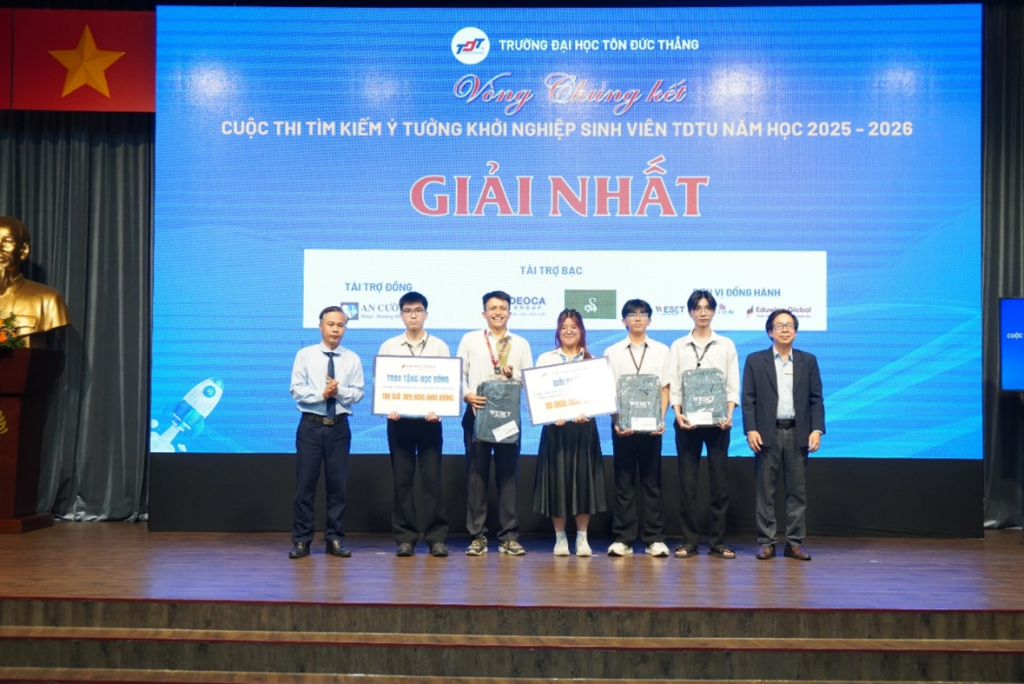
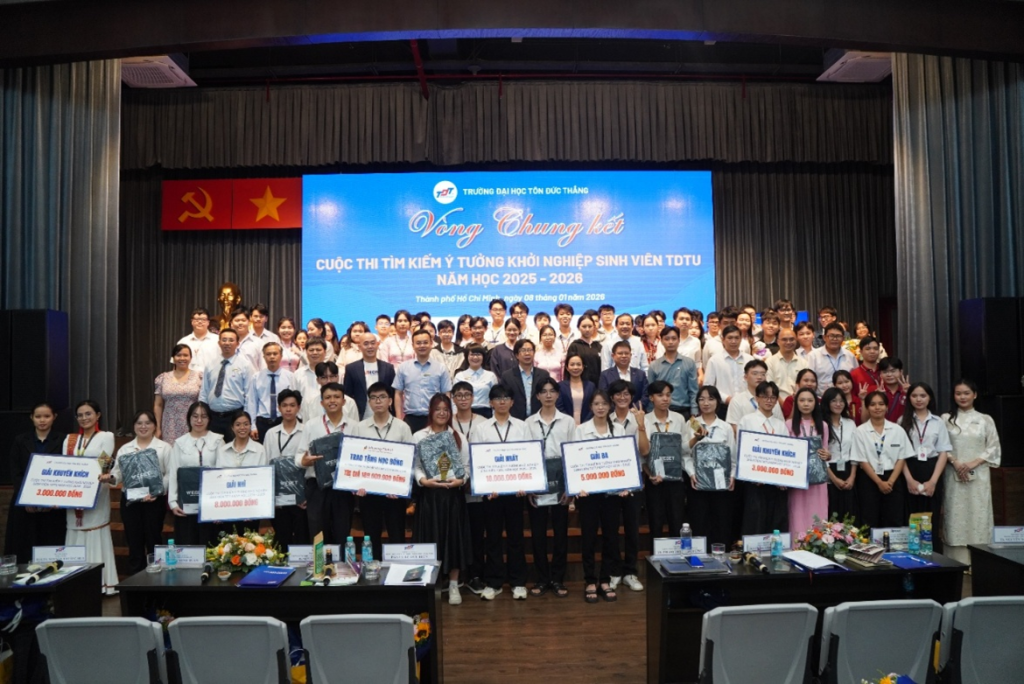
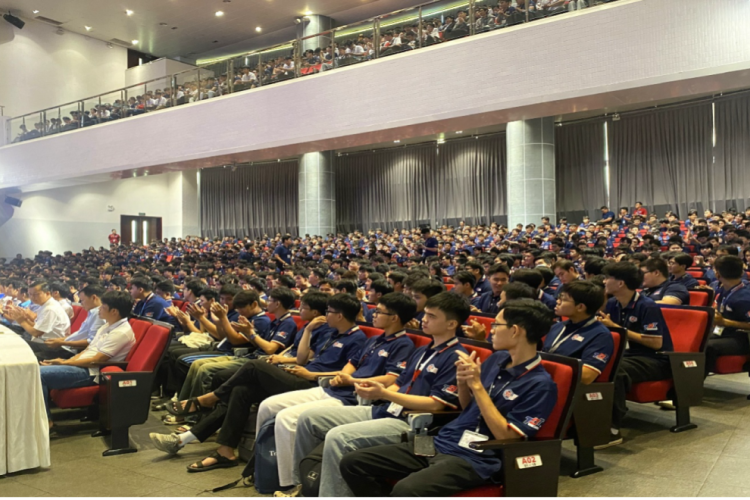
On January 8, 2026, the final round of the “TDTU Student Startup Idea Competition for the academic year 2025 - 2026” was successfully held at Hall 6M, Ton Duc Thang University. This annual competition is organized by the University to foster entrepreneurial spirit, promote innovation, and enhance students’ ability to apply technology in addressing practical challenges faced by the community and society. The competition consisted of two main stages: Stage 1 – Idea presentation and defense, and Stage 2 – Responding to real-world scenarios posed by the Judging Panel. After nearly five hours of intense competition, the participating teams demonstrated strong confidence, creativity, and flexible critical thinking. As a result, the team from the Faculty of Electrical and Electronics Engineering excellently won the First Prize, affirming their professional competence and academic spirit closely associated with technology-based solutions for the community.
The winning team, comprising Pham Anh Khoa, Le Dinh Khanh, Phan Bao Tin, Le Phu Bao, and Ho Cao Bao Tran, under the guidance of Dr. Tran Thanh Nam - Lecturer from the Faculty of Electrical and Electronics Engineering, developed and presented the project entitled “Drone-Based Local Fine Dust Monitoring and Mapping System” The project was designed to overcome the limitations of existing fixed air quality monitoring stations, which mainly collect data at ground level. The proposed solution integrates UAV technology, the PMS7003 optical laser dust sensor, and 2D digital spatial mapping, enabling real-time collection, visualization, and analysis of fine dust data at different altitudes. The collected data are synchronized online to a visualization platform, allowing users to easily observe, compare, and assess air quality in specific areas.
With high applicability in urban environmental monitoring, the project supports management agencies in identifying pollution hotspots and provides reliable data for urban planning and scientific research. Notably, the system’s implementation cost is approximately 60-70% lower than that of imported solutions, contributing to the promotion of “Made in Vietnam” technological self-reliance and making a meaningful contribution to efforts aimed at reducing air pollution in Vietnam.
Highlights from the Final Round: