Seminar on “PCB Design Process: From Software Design to Real-World Project Implementation”
With the aim of strengthening the connection among alumni, the University, and current students, the Faculty of Electrical and Electronics Engineering organized a seminar entitled “PCB Design Process: From Software Design to Real-World Project Implementation.” The event provided an opportunity for students to engage, exchange ideas, and gain professional and practical insights, thereby contributing to a clearer orientation of career pathways in hardware design within the electrical and electronics field.
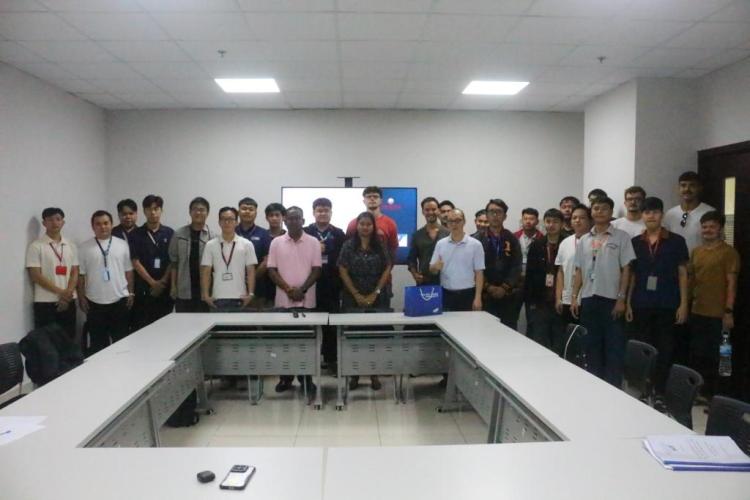
The seminar featured Mr. Mai Minh Man, Director of FUVITECH Technology and Design Co., Ltd., and an alumnus of the Faculty. The event also attracted the participation of faculty members and students from the Faculty of Electrical and Electronics Engineering, creating a dynamic and open academic environment.
The seminar aimed to provide students with a comprehensive and systematic understanding of the Printed Circuit Board (PCB) design process, from schematic design using software tools to implementation and application in real-world projects. In addition, students were introduced to widely used PCB design tools and software, as well as the practical workflow in industry, including circuit design, PCB fabrication, component assembly, testing, and product finalization. This exposure enables students to better understand industry requirements, essential skill sets, recruitment demands, and suitable career orientations after graduation.
The seminar content focused on key aspects of PCB design and project implementation. Mr. Manh presented an overview of PCB technology, including fundamental concepts, common types of PCBs, and their critical role in modern electrical and electronic systems. This was followed by an introduction to PCB design software and essential procedures such as schematic capture, component placement, PCB layout routing, design rule checking (ERC/DRC), and generating manufacturing files (Gerber).
Particularly, the discussion on real-world project implementation provided students with a clear understanding of the entire development cycle—from initial concept and circuit design to PCB fabrication, component assembly, testing, and final product completion. In addition, important design principles were emphasized, including proper component placement, power and ground plane design, electromagnetic interference (EMI) mitigation, separation of analog and digital signals, and compliance with fundamental technical standards.
The seminar also demonstrated practical applications of PCB through various products such as IoT boards, power circuits, control circuits, and embedded systems, while highlighting common issues encountered during PCB design and manufacturing. Furthermore, students were guided on essential skills such as reading and analyzing datasheets, circuit debugging, building personal projects (portfolios), and exploring career opportunities in hardware design.
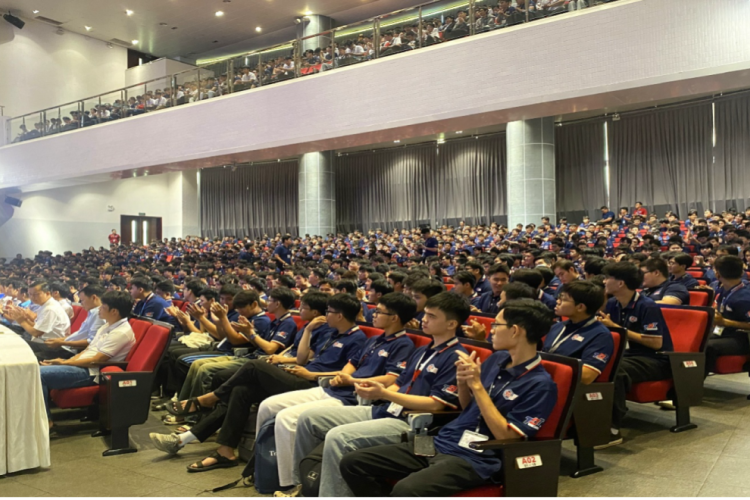
The interactive discussion session between students and the speaker was lively and engaging, with numerous questions related to academic learning, technical skills, and career orientation being thoroughly addressed. The seminar not only delivered in-depth technical knowledge but also inspired students’ passion for research, innovation, and proactive learning.
Through this activity, the Faculty of Electrical and Electronics Engineering continues to affirm its practice-oriented training approach, strengthen connections with alumni and industry, and contribute to improving the quality of human resources to meet the demands of the electrical and electronics industry in the digital era.
Highlighted moments from the seminar are presented below: